



A data problem isn’t truly solved until it’s solved for everyone who depends on it.
For leaders, that means trusted insights.
For teams, that means usable, reliable pipelines.
For customers, that means better experiences, delivered faster.
As we move toward 2026, data engineering sits at the center of business success. Not as an isolated technical function, but as the connective layer between strategy, operations, analytics, and AI. Organizations across the global markets are realizing that growth is limited not by how much data they have—but by how well their data foundations are engineered.
This is a conversation many enterprises are already in. The challenge is turning trends into outcomes.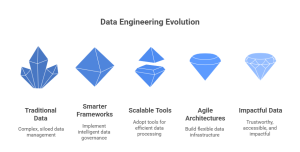
The data engineering reality entering 2026
Most organizations are dealing with the same core issues:
- Data spread across warehouses, lakes, SaaS platforms, and legacy systems
- Pipelines that break silently and erode trust
- Analytics that lag behind real-world events
- AI initiatives stalled by poor data quality and governance
- Rising cloud costs without clear accountability
These challenges are not caused by a lack of tools. They stem from how data platforms are designed, owned, and operated.
Data engineering in 2026 is about moving from fragmented pipelines to intelligent, observable, and product-oriented data platforms.
Trend 1: From pipelines to data products
The challenge
Traditional data pipelines are built for movement, not outcomes. Ownership is unclear, SLAs are missing, and business users struggle to trust or reuse datasets.
The trend
Leading organizations are adopting a data-as-a-product mindset. Each dataset is treated as a product with defined owners, quality metrics, freshness guarantees, and consumers.
The solution approach
Techmango helps organizations design data platforms where ownership is explicit, quality is measurable, and data products are discoverable through catalogs and governance layers. This shift reduces friction between engineering and business teams while accelerating insight delivery.
Trend 2: Lakehouse architectures over fragmented stacks
The challenge
Multiple copies of data across warehouses, marts, and lakes increase cost and complexity. Performance tuning becomes reactive, and analytics teams spend more time reconciling data than using it.
The trend
The lakehouse model—combining scalable object storage with high-performance analytics—continues to mature. It supports BI, streaming, and AI workloads on a unified foundation.
The solution approach
Techmango architects lakehouse-driven data estates that reduce duplication, simplify ingestion, and optimize compute usage. The focus is not just migration, but designing platforms that scale efficiently and support future AI workloads.
Trend 3: Streaming and real-time data engineering
The challenge
Batch processing cannot support use cases such as fraud detection, live operations dashboards, personalization, or predictive alerts. Decisions arrive too late.
The trend
Streaming-first architectures using event-driven pipelines are becoming standard for high-impact use cases. Real-time data is no longer optional.
The solution approach
Techmango builds streaming data pipelines that integrate seamlessly with analytics and operational systems ensuring low latency without sacrificing reliability or governance. Real-time insight becomes a built-in capability rather than a special project.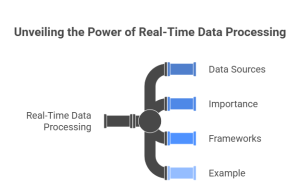
Trend 4: Data observability and trust engineering
The challenge
Broken pipelines often go unnoticed until business users raise issues. Data downtime silently impacts decisions, revenue, and credibility.
The trend
Data observability—monitoring freshness, schema changes, volume anomalies, and lineage—is becoming a core part of data engineering.
The solution approach
Techmango embeds observability into the data lifecycle, combining automated quality checks, lineage tracking, and alerting. This creates platforms that engineers can trust and business users can rely on.
Trend 5: Metadata, governance, and self-service at scale
The challenge
As platforms scale, governance often slows teams down. Manual approvals and unclear policies discourage adoption.
The trend
Governance is shifting from control-heavy processes to policy-driven enablement, powered by metadata, catalogs, and automation.
The solution approach
Techmango implements governance-by-design—embedding access controls, lineage, and compliance directly into platforms while enabling safe self-service analytics. Teams move faster without increasing risk.
Trend 6: AI-ready data engineering
The challenge
AI initiatives stall because data is incomplete, inconsistent, or not reproducible. Models cannot be trusted if pipelines are unstable.
The trend
Data engineering is becoming AI-aware. Feature stores, versioned pipelines, and reproducible data flows are now essential.
The solution approach
Techmango designs data foundations that support AI from day one—ensuring feature freshness, traceability, and alignment between analytics and machine learning workflows.
Trend 7: Cost-aware data platforms
The challenge
Cloud costs grow faster than value. Teams lack visibility into which pipelines, queries, or teams drive spend.
The trend
Cost governance is becoming a first-class data engineering concern, not an afterthought.
The solution approach
Techmango builds platforms with usage visibility, tagging strategies, and optimization patterns that align cost with business value—helping organizations scale responsibly.
Tools shaping data engineering success in 2026
While tools alone do not solve problems, certain categories are becoming foundational:
- Lakehouse and cloud data platforms
- Orchestration and workflow automation
- Streaming and event platforms
- Transformation and analytics engineering frameworks
- Metadata, catalog, and governance tools
- Data observability and quality platforms
- Feature stores and AI integration layers
Techmango’s role is to integrate these tools into coherent, outcome-driven platforms, tailored to business needs rather than vendor preferences.
USA and UAE: shared ambition, different contexts
In the USA, data engineering initiatives often focus on enterprise scale, regulatory rigor, and AI maturity. Platforms must integrate with complex ecosystems while maintaining trust and performance.
In the UAE, rapid digital transformation, smart infrastructure, and national data initiatives drive demand for platforms that deliver speed, innovation, and governance together.
Across both regions, the expectation is the same: data platforms must deliver results, not just architecture diagrams.
A partnership mindset: how Techmango engages
At Techmango, data engineering engagements are built as partnerships, not projects.
We start by listening—understanding business objectives, decision bottlenecks, and growth priorities. From there, we design data platforms that:
- Align engineering choices with business outcomes
- Balance innovation with stability
- Enable analytics and AI without increasing risk
- Evolve as organizations scale
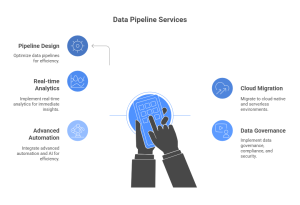
Our teams work alongside clients across data engineering services, data platform modernization, analytics enablement, and AI readiness—helping organizations turn trends into tangible advantage.
Final thought: data success in 2026 is engineered
Data success is not accidental. It is engineered through thoughtful design, disciplined execution, and shared ownership.
As data volumes grow and expectations rise, organizations that invest in modern data engineering practices will move faster, decide with confidence, and innovate responsibly.
The question for 2026 is not which tools to adopt—but how intentionally data platforms are built to serve people, decisions, and growth.
At Techmango, that is the partnership we aim to build—one data platform at a time.