



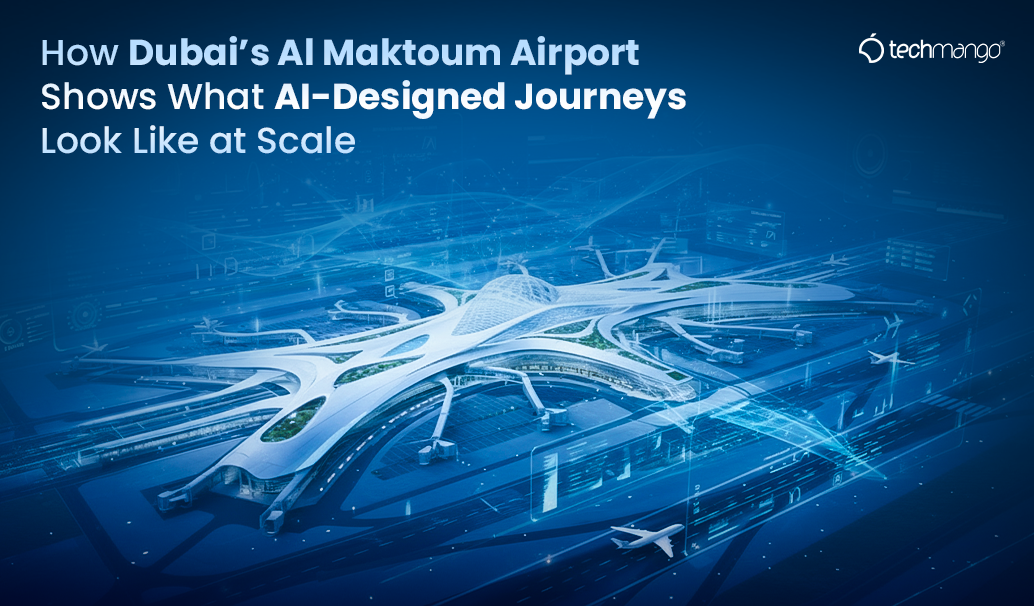
AI-led initiatives such as Dubai’s Al Maktoum Airport transformation illustrate a growing opportunity for enterprises and technology builders to apply intelligence where scale, complexity, and experience intersect. By using AI to dynamically manage passenger movement and operational decisions, airports are evolving from static infrastructure to adaptive, data-driven systems.
This shift highlights how AI delivers the most value—not as a standalone capability, but as an integrated part of operational architecture.
What this kind of implementation makes possible:
- Continuous optimization of large, complex environments using real-time data
- Predictive decision-making that anticipates demand, congestion, and flow
- Experience-led design that improves outcomes without increasing operational overhead
Building such systems requires more than models. It requires platforms that can ingest high-velocity data, apply intelligence in real time, and scale reliably under real-world conditions.
Techmango brings strong capability in designing and engineering these AI-driven platforms. The focus remains on turning data into actionable artificial intelligence that supports day-to-day operations and long-term growth.
Core strengths that enable this:
- Real-time optimization engines for movement, routing, and operational efficiency
- Predictive analytics and AI models designed for continuous learning and adaptation
- Enterprise-grade architectures that embed AI into existing ecosystems
- Scalable, resilient systems built for mission-critical environments
As organizations move beyond experimentation, the emphasis shifts toward building AI that is practical, reliable, and measurable. The most impactful solutions are those that quietly enhance experience while enabling smarter decisions at scale.
The next phase of AI adoption will be defined by how effectively intelligence is built into everyday operations and how seamlessly it improves the journeys people take, both physical and digital.