



The global demand for mobile applications continues to surge, but so does the competition to deliver them faster, smarter, and more cost-effectively. In 2025, offshore app development has become a strategic lever for businesses, allowing them to scale rapidly without compromising quality. For companies in the US, navigating offshore app development cost factors—from team expertise to platform selection—will define the long-term ROI of their digital initiatives.
Balancing Cost and Quality in Offshore App Development
One of the biggest misconceptions about offshore development is the belief that cutting costs means sacrificing quality. In 2025, that equation has changed. Offshore teams are no longer just about affordable labor; they represent centers of excellence in mobile, cloud-native, and AI-driven applications. By partnering with a reputable custom app development company, US businesses are increasingly accessing:
- Tier-1 talent across emerging technologies like generative AI app development, real-time data pipelines, and connected IoT ecosystems.
- Agile and DevOps-led workflows that compress time-to-market without compromising performance.
- A balance of cost-efficiency and scalability, especially as app maintenance and lifecycle costs remain critical to overall ROI.
Understanding Offshore App Development Costs
The average mobile app development cost in 2025 ranges anywhere from $30,000 to $300,000, depending on complexity, features, and post-deployment needs. Offshore software development pricing is shaped by a combination of factors:
- Location and hourly rates: Offshore development team rates differ significantly. While a developer in the US may charge $120–$180/hour, offshore skilled engineers can deliver at $25–$60/hour without compromising expertise.
- Engagement model: Fixed-cost contracts work best for MVPs, while agile time-and-materials models suit evolving enterprise products.
Technology stack and integration readiness: Custom app development cost factors often spike with AI/ML integration, AR/VR, blockchain, or multi-cloud deployments.
For a broader look at how custom and cloud-native solutions drive digital transformation, check out our article on Empowering Digital Transformation Through Custom and Cloud-Native Application Development.
Assessing Complexity and Scale
Not all apps are created equal. A simple MVP with limited features can be built affordably, but scaling an enterprise-grade app with role-based access, ERP integration, and predictive analytics drives costs upward.
- Basic apps: $30,000 – $80,000 (2–3 months)
- Mid-complexity apps: $80,000 – $150,000 (4–6 months)
- Enterprise-grade apps: $150,000 – $300,000+ (6–12 months)
Complexity is further defined by backend scalability, cross-device support, cybersecurity certifications, and compliance mandates (HIPAA, GDPR, SOC2).
Choosing Platform, Framework, and Technology
The choice of framework and platform has a direct impact on app development costs in 2025:
- Native apps (Swift, Kotlin, Objective-C): High-performance, but costlier due to dual-team development.
- Cross-platform (Flutter, React Native): Cost-efficient with single codebase, ideal for rapid prototyping and scaling.
- Cloud-native architectures: Growing adoption in enterprise mobility to ensure speed, scale, and long-term maintainability.
- Generative AI integrations: Businesses are rapidly adopting AI-driven features such as personalization, conversational AI, and predictive insights—leading to higher upfront costs but exponential ROI.
Calculating Cost Based on Team Size and Skillset
Team composition is the foundational factor in app development outsourcing. A typical offshore development team may include:
- Project Manager
- 2–4 Mobile Developers (iOS, Android, or Cross-Platform)
- 1–2 Backend Developers
- QA/Testing Engineer
- UI/UX Designer
- Cloud/DevOps Specialist
Team sizes grow based on project complexity, with hourly team costs ranging from $5,000–$25,000/month in offshore markets, offering US firms savings of 40–60% compared to in-house models.
Legacy systems are a common roadblock in enterprise transformation. See how one industry — automobile spare parts manufacturing — tackled this in our case-driven blog on Legacy Modernization and Its Role in Business Success.
Maintenance and Support Post-Deployment
Businesses often underestimate offshore app maintenance costs. In 2025, maintaining high-performing apps typically accounts for 15–25% of the original development cost annually, covering:
- Infrastructure scaling
- Security patching and compliance upgrades
- OS and SDK updates
- Continuous optimization with analytics-driven improvements
For long-term success, businesses are proactively allocating budgets for post-release monitoring, cloud-native scalability, and integrating emerging APIs.
Strategic Advantages of Offshore Development for US Companies
For US firms, partnering with offshore teams in 2025 is less about cost arbitrage and more about strategic advantage:
- 24/7 global development cycle: Overnight progress enabled by time-zone advantages.
- Access to emerging tech expertise: Generative AI, cloud-native microservices, and cross-platform mastery.
- Scale without overhead: Flexible offshore team structures let companies pivot quickly without long-term staffing costs.
- Regulatory compliance: Offshore firms have matured to guarantee HIPAA, GDPR, SOC 2, and ISO certifications.
- Reduced risk-to-market: With agile and lean offshore models, prototypes can be validated faster while minimizing investment risks.
Why Techmango is a Trusted Offshore Partner
At Techmango, we have positioned ourselves as a leading custom app development company for US businesses navigating offshore app development in 2025. What sets us apart:
- 100+ custom mobile applications delivered across industries.
- 460+ skilled engineers, designers, and QA specialists fueling innovation.
- 200+ end-to-end projects executed, adapting offshore expertise for US market needs.
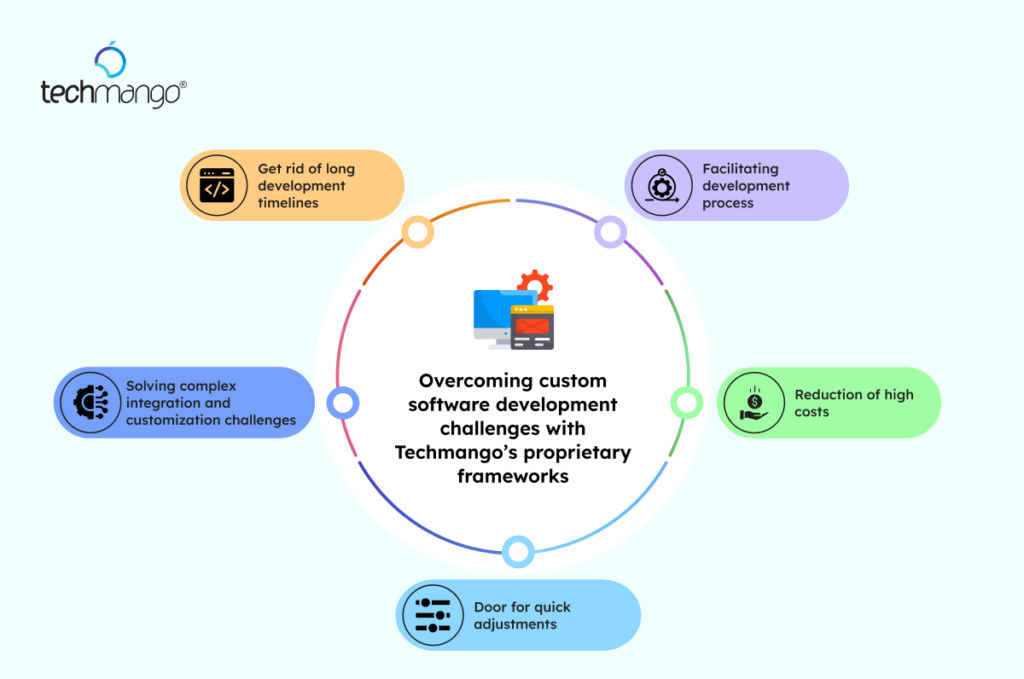
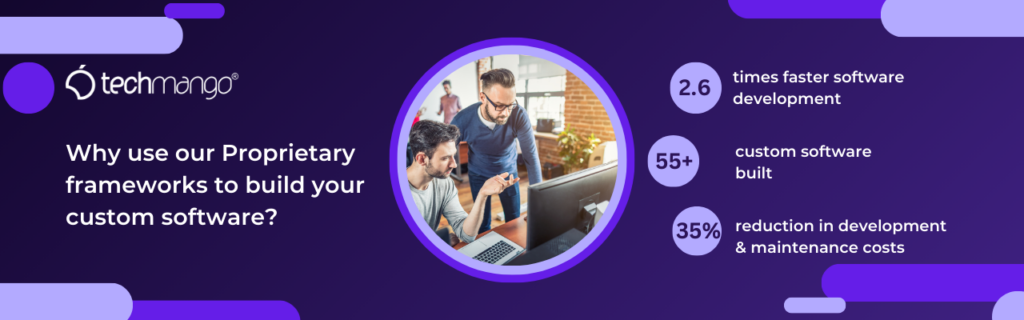
- Proprietary frameworks and accelerators that reduce time-to-market and cost overheads.
We deliver:
- Custom mobile app development (iOS, Android, and cross-platform) with scalability and performance at the core.
- Enterprise-grade applications designed for compliance and security.
- Generative AI integration and modernization services that future-proof businesses.
- Lifecycle support including UI/UX design, backend automation, app store release, and long-tail maintenance.
Techmango’s model combines onshore strategic oversight with offshore delivery excellence, ensuring US businesses maximize their digital investments.
If you are exploring offshore app development costs, challenges, and ROI opportunities in 2025, Techmango can be your strategic partner in building applications tailored to scale with your business.
Frequently Asked Questions
Offshore app development costs range from $30,000 for basic apps to over $300,000 for enterprise-grade solutions, depending on complexity, features, and integrations.
It allows access to skilled global developers at a lower cost, faster delivery cycles, and round-the-clock progress—ensuring better scalability and reduced risk-to-market.
Techmango’s processes align with HIPAA, GDPR, and SOC 2 standards. Secure APIs, encryption, and compliance-first design ensure data protection throughout the development lifecycle.
Fixed-cost contracts are ideal for MVPs or defined projects, while agile time-and-material models work best for ongoing, evolving enterprise applications.
By leveraging pre-built accelerators and automated CI/CD pipelines, Techmango minimizes repetitive tasks, enhances code reusability, and speeds up project delivery without sacrificing quality.