



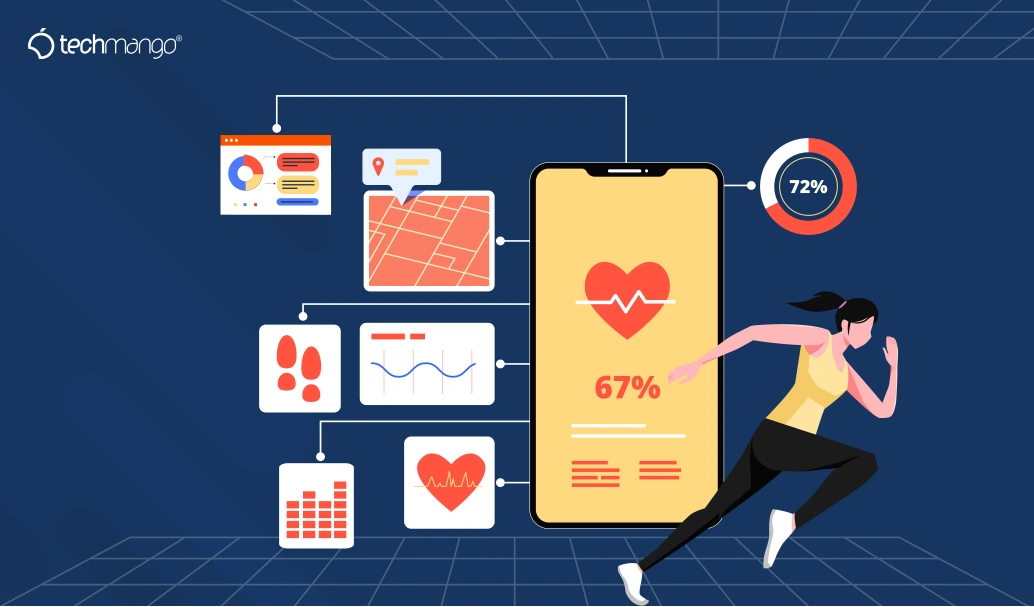
Fitness apps are entering a new stage of growth. Success is not defined only by how many workouts are tracked or how many calories are counted. As the industry moves toward 2026, leading platforms stand out by how well they turn continuous data into insight that users can understand, trust, and use in their daily routines. The global fitness app market reached more than USD 10.5 billion in 2024 and continues to expand steadily, increasing competition and raising expectations across the industry.
Data analytics plays a central role in this shift. It influences how fitness experiences are designed, how they improve over time, and how value is created for users and businesses. Analytics helps apps move beyond basic tracking and toward personalized guidance, adaptive plans, and meaningful progress indicators. Research shows that more than 75 percent of users expect personalized experiences as part of their fitness apps, making analytics a core requirement rather than a feature add-on.
User behavior reinforces this trend. Industry studies indicate that many fitness apps lose a large share of users within the first few weeks when experiences feel generic or disconnected from individual goals. People now expect fitness applications to learn from their behavior, adjust to their progress, and reflect their personal journey. For fitness brands, this changes the role of analytics. It is not just a reporting function. It has become a foundation for product strategy, user engagement, and long-term growth.
Without strong analytics, fitness apps risk becoming short-term utilities. With analytics built into the core, they can evolve into trusted digital partners that support consistent engagement, better outcomes, and lasting user relationships.
If you’re still exploring the broader value of mobile apps in business, check out our blog on the Significance of Mobile App Development for Business Success. It sets the stage for why app-based solutions are key in today’s digital economy.
From Fitness Tracking to Intelligent Health Experiences
The initial fitness applications appeared as tools which tracked physical exercise activities. The main structure of the experience consisted of steps and sessions together with fundamental measurement data. The method provides value but it fails to establish a unique position in the competitive market which has reached its peak.
The current fitness platforms need to process data through analysis instead of performing basic recording functions. The analytics system transforms workout data and biometric measurements and user actions into customized real-time insights. The path forward becomes apparent. The recommendations appear relevant to the user. The process of maintaining motivation becomes less challenging.
The development requires engineering decisions to work together with analytical model development. Three main components must exist for intelligent fitness experiences to succeed: dependable data transmission systems, mobile architecture that can handle growth and seamless connection between devices and their platforms.
Why Data Analytics Is Central to Fitness App Success
Fitness data is continuous, behavioural, and highly personal. Wearables, sensors, smartphones, and manual inputs generate large volumes of information that must be processed securely and often in real time. Analytics gives this data purpose.
When applied effectively, analytics supports fitness apps across three dimensions:
- User experience: Adaptive plans, personalised feedback, and meaningful progress indicators
- Product intelligence: Understanding which features engage users and why
- Business performance: Improving retention, monetisation, and long-term adoption
Without analytics, fitness apps risk becoming static tools. With analytics, they evolve into responsive platforms that grow with their users.
Want to learn how mobile apps directly influence business performance? Dive into our comprehensive guide on increasing ROI with mobile apps, where we break down user acquisition strategies, analytics, and campaign insights.
Turning Concepts into High-Impact Mobile Solutions
Delivering analytics-ready fitness apps requires more than technical execution. It demands delivery maturity, cross-functional coordination, and a strong understanding of how mobile systems scale.
At Techmango, mobile app development is treated as a strategic capability. With 100+ custom mobile applications delivered, 200+ end-to-end projects executed, and 460+ developers, designers, and QA specialists, Techmango brings the depth required to support complex, data-driven fitness platforms. Proprietary frameworks and accelerators further help streamline delivery while maintaining quality and consistency.
This experience is particularly valuable in fitness applications, where performance, responsiveness, and reliability directly influence user trust.
Analytics-Driven Architecture for Fitness Apps
Data analytics shapes fitness app architecture from the outset. Decisions around how data is collected, stored, processed, and surfaced determine what the platform can deliver over time.
A modern fitness app typically brings together:
- Mobile applications for iOS and Android
- Backend services for users, content, and activity data
- Cloud infrastructure for scale and resilience
- Analytics layers for insight, prediction, and personalisation
Techmango designs mobile architectures with analytics built in, ensuring data flows securely and efficiently from devices to insights without creating technical friction.
Looking to build a data-driven fitness app that performs? Discover how Techmango can help you Dominate Your Competitors with Reliable Mobile App Development Services.
Proven Results in Enterprise-Grade Mobile App Development
Analytics-enabled fitness apps often need to integrate with broader enterprise and cloud ecosystems. Techmango’s delivery record reflects this capability:
- 85% of applications integrated with cloud and enterprise systems, enabling scalability and interoperability
- 90% quicker time-to-market, supporting rapid iteration in competitive environments
- 4.8 average app store rating, reflecting strong usability and performance
These outcomes are particularly relevant in fitness, where user expectations are shaped by leading consumer platforms.
Mobile Development Services That Enable Intelligent Fitness Apps
Techmango’s mobile development services are designed to support analytics-driven fitness platforms across their lifecycle.
Custom Mobile Application Development (iOS & Android)
Native applications built using Swift, Kotlin, and Objective-C deliver the performance required for sensor data processing, animations, and real-time feedback.
Cross-Platform Mobile Application Development
Using React Native or Flutter, Techmango accelerates delivery through a single codebase while maintaining a native-like user experience across platforms.
Enterprise Mobile Application Development
Secure, scalable fitness platforms integrate with ERP, SSO, and MDM systems, supporting corporate wellness and enterprise use cases.
Mobile App Modernization
Legacy fitness applications are modernised using cloud-native architectures, microservices, and modern UI frameworks to support analytics and long-term growth.
UI/UX Design & Prototyping
User behaviour and motivation guide design decisions. Techmango creates intuitive interfaces and prototypes that balance accessibility, brand goals, and engagement.
Mobile Backend & API Integration
Reliable backends and secure APIs support real-time data handling, authentication, and integration with wearables, payments, and third-party platforms.
Mobile AI/ML Integration
Predictive insights, personalisation, and intelligent automation are enabled through Core ML, TensorFlow Lite, and custom machine learning models.
Why Clients Prefer Techmango for Fitness App Development
Fitness platforms operate across regions, devices, and regulatory environments. Clients value Techmango’s ability to combine innovation with operational discipline.
- 24/7 support aligned to global time zones
- Strategic oversight supported by onshore-offshore delivery
- Enterprise-grade security and compliance practices
- Agile development aligned to business priorities
- Focus on long-term value and performance
From concept to launch, Techmango manages the full delivery lifecycle, enabling faster releases without compromising quality.
Technology Stack Built for Performance and Insight
Techmango works with a modern, analytics-ready technology stack:
- Front-end: Swift, Kotlin, React Native, Flutter
- Back-end: Node.js, Python, .NET, Java
- Cloud: AWS, Azure, Google Cloud
- Advanced capabilities: AI/ML, IoT, AR/VR, Firebase, MongoDB, MySQL
This stack supports high-volume fitness data, real-time analytics, and continuous evolution.
What Fitness Brands Gain with Techmango
Partnering with Techmango provides fitness brands with platforms designed to scale and adapt.
- End-to-end mobile app support
- Secure iOS, Android, and cross-platform delivery
- User-friendly, modern design
- Architectures built to support growth
- Smart features with AI and IoT readiness
- Dedicated QA ensuring consistent performance
Conclusion: Analytics as the Differentiator in Fitness Apps
The fitness applications will shift their competition from features to intelligence-based capabilities starting in 2026. Data analytics will define how platforms engage users, retain loyalty, and grow sustainably.
The development of fitness apps depends heavily on strategic analytics to create useful and practical applications. The system determines the way users see their progress and how businesses track their achievements and how platforms evolve. The combination of mobile engineering with analytics-ready architecture and enterprise-grade delivery enables Techmango to build applications for fitness brands which become both resilient and intelligent as well as ready for future development.
Top 6 Data Engineering challenges and how Techmango overcomes them?
what an insightful article, it is true that fitness app much relied on data analytics as the user will mostly be expecting personalized recommendations which can be effectively determined by proper analytics of tracked data !!!
Thanks for this blog, its very helpful and easy to understand. Appreciate your work
Thank you for providing such an informative and well-researched blog post. I found the content to be valuable, and I appreciated the depth of analysis you offered.
I found your post to be well-structured and insightful.
This blog beautifully highlights the significant role of data analytics in fitness app development. By leveraging data, fitness apps can provide personalized experiences, track progress, and offer valuable insights. A great read that emphasizes the power of data-driven solutions in the fitness industry
I’m impressed by the level of detail you’ve covered in this post. It’s clear that you’re a subject matter expert.
Your blog article is informative and captivating, providing valuable insights in a clear and clear manner.
This article highlights the significance of data analytics in fitness app development, offering valuable insights for readers interested in leveraging data-driven approaches to enhance their fitness experiences.
Amazing Blog. thank you for sharing this information.
After reading your article I was amazed. I know that you explain it very well. And I hope that other readers will also experience how I feel after reading your article. Thanks for sharing.
I feel very grateful that I read this. It is very helpful and very informative and I really learned a lot from it.
Hi there, of course this article is truly nice and I have learned lot of things from
it about blogging. Thanks.
Thank you so much for taking your time in adding a lot of details to this content.
Thank you for taking the time to read and appreciate this article. I’m glad to hear that you found it valuable. If you’re interested in learning more about Energy & Resources analytics services, I can recommend one of the best providers in Hyderabad.
Energy & Resources analytics services
Thank you for taking the time to read and appreciate this article. I’m glad to hear that you found it valuable. If you’re interested in learning more about Energy & Resources analytics services.
Energy and resources analytics services
Interesting read! Your post offers a fresh perspective that challenges conventional thinking. Looking forward to more thought-provoking content from you.