



As the pace of digital modernization continues to intensify, mobile applications have transitioned from being auxiliary touchpoints to becoming the primary interface through which businesses operate, innovate, and engage. As we enter 2026, nearly 72% of customer interactions will occur through mobile channels, while enterprise mobility spending is projected to exceed $1.3 trillion globally. Organizations no longer ask “Should we build a mobile application?” The question has evolved into something far more strategic:
“Which mobile ecosystem, which architecture, and which development framework will sustain our growth for the next decade?”
At Techmango, we’ve always believed that true transformation occurs when engineering precision, human-centric design, and enterprise strategy move in sync. Our teams do not merely build applications — they help organizations modernize workflows, reimagine customer experiences, and create digital ecosystems that scale.
Techmango partners with emerging and mature frameworks to build mobile solutions engineered for resilience, speed, intelligence, and future-readiness. With 460+ engineers, architects, UI/UX specialists, and quality analysts, and more than 100 custom mobile applications delivered, we have developed a unique vantage point into what frameworks will define the mobile landscape in 2026.
Below is a deeply detailed, highly practical, and expert-driven guide — shaped by real enterprise needs, global adoption trends, and architectural patterns powering mobile innovation worldwide.
To dive deeper into how modern mobile app strategies are transforming industries, explore our article on modern practices in mobile app development for new-age business domains.
Also, discover how emerging technologies like the Internet of Things are shaping the future of mobile experiences in our blog on 11 Important Things Why IoT is the Future of Mobile App Development.
Key Takeaways
- The best mobile app development frameworks in 2026 must support AI/ML integration, cloud-native architectures, real-time data sync, secure workflows, and multi-platform reach.
- Flutter, React Native, Kotlin Multiplatform, SwiftUI, .NET MAUI, Ionic + Capacitor, Unity, and Next.js stand out as the most future-ready frameworks.
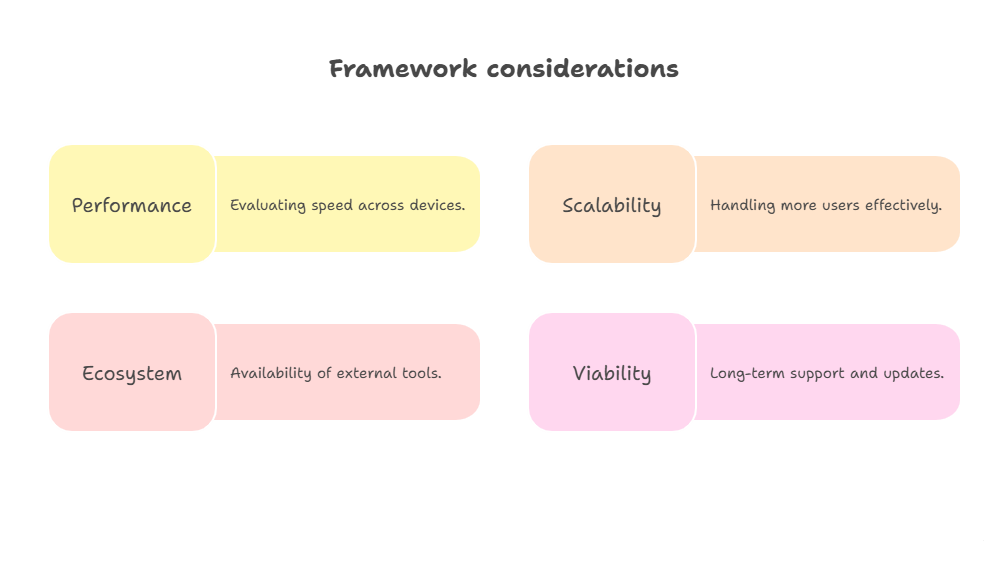
- Framework choices must consider scalability, team skillset availability, maintenance requirements, compliance, performance, and integration with enterprise systems.
- Organizations adopting modern frameworks see up to 90% faster time-to-market and 40–60% development cost optimization.
- Talent availability and long-term maintainability are becoming more important than raw performance alone.
- Techmango’s mobile engineering teams leverage 10+ proprietary accelerators, enabling faster delivery, cloud-native optimization, and enterprise-grade security.
What Is a Mobile Application Development Framework?
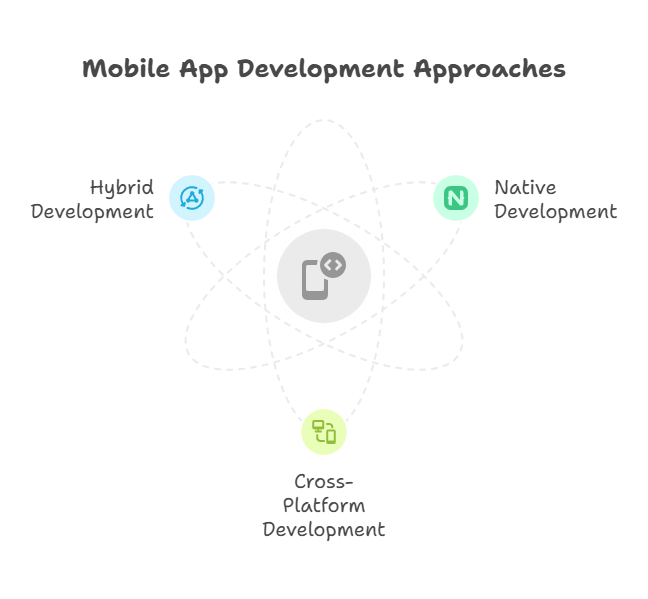
A mobile application framework is a pre-structured software foundation that offers:
- UI components
- Development workflows
- Compilers and rendering engines
- Performance optimization tools
- Backend connectivity modules
- Debugging and testing utilities
- State management
- Hardware, sensor, and native API access
It allows development teams to build mobile apps faster, with consistency, and at enterprise scale, ensuring best practices in architecture, security, and performance.
Why Do You Need a Mobile App Development Framework?
1. Reduced Engineering Time (30–45% Faster Delivery)
Frameworks eliminate repetitive setup tasks and provide reusable assets.
2. Cross-Platform Efficiency
Build once → Run on iOS, Android, Web, Desktop (depending on framework).
3. Enterprise-Grade Security & Compliance
Frameworks today support SSO, OAuth, MDM, SAML, Zero Trust, and encrypted data flows.
4. Performance Across Devices
Frameworks optimize memory management, rendering, and runtime behavior.
5. Cloud Ecosystem Alignment
Modern frameworks integrate seamlessly with AWS, Azure, GCP, Firebase, and real-time databases.
6. Accelerated UI/UX Delivery
Pre-styled components drive consistency in brand experience.
7. Talent Ecosystem Availability
Thousands of developers, libraries, patterns, and community ecosystems enable faster support and scaling.
Top 8 Best Mobile App Development Frameworks to Use in 2026
This list is carefully curated based on:
- Enterprise adoption
- UI performance
- Cloud readiness
- AI capability
- Security posture
- Talent availability
- Architecture maturity
- Long-term sustainability
1. Flutter (Google)
Flutter continues to shape the next generation of multi-platform applications, providing unmatched visual fidelity and near-native performance.
Intro
Flutter compiles into native ARM code, eliminating performance bottlenecks. Using the Dart language, it supports iOS, Android, Web, Windows, macOS, Linux, and embedded systems.
Why It Dominates in 2026
- Flutter’s performance is consistently 2x faster than typical hybrid frameworks.
- Its high-performance rendering engine (Skia) ensures 120 FPS smooth animations.
- Suitable for enterprise superapps, fintech, logistics apps, and dashboard-heavy applications.
Pros
- Single codebase for 6+ platforms
- Predictable UI rendering
- Strong Google developer ecosystem
- Excellent support for animation-heavy workflows
Cons
- Large initial app size
- Requires Dart upskilling
Limitations
- Less ideal for extremely lightweight MVPs
Examples
Google Ads, eBay Motors, BMW ConnectedDrive.
2. React Native (Meta)
React Native remains the most widely adopted mobile framework for companies with strong JavaScript-driven ecosystems.
Intro
It combines JavaScript and React to build mobile apps with native components.
Why It’s Essential in 2026
- Massive talent pool → lower hiring cost
- Mature tooling → reliable for enterprise apps
- Integration with Next.js → supports hybrid apps and superapp architectures
Pros
- Web-to-mobile synergy
- Strong community
- Rapid development cycles
- Easier learning curve
Cons
- Heavy reliance on third-party modules
Limitations
- Complex animations may require native bridging
Examples
Instagram, Tesla, Skype, Bloomberg.
3. Kotlin Multiplatform Mobile (KMM)
KMM is the fastest-growing enterprise choice for mobile engineering in 2026.
Intro
KMM enables shared business logic between Android and iOS, while keeping UI layers native.
Why Enterprises Prefer It
- Shared logic reduces 50% development cost
- Native UI ensures highest performance
- Strong JetBrains and Google backing
Pros
- High performance
- Secure & enterprise-ready
- Native UI + Shared core logic
- Superior maintainability
Cons
- Smaller but rapidly growing community
Limitations
- Best suited for mid-to-large systems
Examples
Netflix, VMware, Philips Healthcare.
4. SwiftUI (Apple)
SwiftUI is Apple’s future — a declarative framework shaping everything from iPhone apps to VisionOS experiences.
Intro
Designed by Apple, SwiftUI enables fast, responsive, modern apps.
Why It Matters in 2026
- Core for Apple VisionOS
- Supported deeply by Apple’s ecosystem
- Simplifies UI, animations, gestures, accessibility
Pros
- Elegant declarative syntax
- Native-level performance
- Works with minimal code
Cons
- Apple-only
Limitations
- Reduced backward compatibility
Examples
Finance, enterprise workflow apps, medtech dashboards.
5.NET MAUI (Microsoft)
.NET MAUI is a unified framework for building multi-platform apps using C#.
Intro
Supports Android, iOS, macOS, and Windows.
Why It’s a Top Enterprise Pick
- Strong Microsoft ecosystem
- Easy integration with Azure cloud and enterprise IAM
- Excellent maintainability
Pros
- Single codebase
- MVU architecture
- Enterprise-first design
Cons
- Smaller component library
Limitations
- Not ideal for graphics-heavy consumer apps
Examples
Internal enterprise systems, portals, logistics tools.
Choosing the right mobile app development framework isn’t just about trends — it’s about aligning your tech stack with your business goals, target users, and scalability needs. If you’re unsure where to start, our guide on how to choose the right tech stack for mobile app development offers a strategic breakdown to help you decide.
Interested in React Native specifically? Don’t miss our blog on the latest trends in React Native app development, which explores how this popular framework is evolving in 2025.
6. Ionic + Capacitor
The best choice for businesses with strong web teams.
Intro
HTML + CSS + JS powered apps with native device access via Capacitor.
Why It Still Thrives in 2026
- Lowest learning curve
- Lightning-fast MVP development
- Best for content-heavy apps and rapid deployment
Pros
- Web-native development
- Huge JS ecosystem
- Cost-effective
Cons
- Performance dependent on WebView
Limitations
- Not ideal for high-performance applications
Examples
CRM apps, SaaS dashboards, e-learning apps.
7. Unity (Mobile Games & AR/VR)
Unity remains unmatched in 3D rendering, physics engines, and immersive experiences.
Why It Matters in 2026
- AR/VR adoption is growing 4x annually
- Enterprise simulations & training apps are accelerating
- Supports cross-platform gaming ecosystems
Pros
- Advanced 3D tools
- Massive asset store
- Enterprise-ready
Cons
- Heavy installation and learning curve
Limitations
- Not for simple 2D enterprise apps
Examples
Pokemon GO, 3D training simulations, AR-based retail apps.
8. Next.js (Hybrid Apps, PWAs, Superapps)
Next.js is shaping the future of web + mobile convergence.
Why It’s Critical for 2026
- Ideal for superapps
- Enables offline-first mobile experiences
- Supports PWA and hybrid mobile deployment
Pros
- Best SEO performance
- Strong React ecosystem
- Ideal for dashboards & portals
Cons
- Requires container wrappers for native apps
Limitations
- Not suitable for native hardware-intensive apps
Comparison Chart — Selecting the Right Framework
|
Framework |
Performance |
Learning Curve |
Talent Availability |
Ideal For |
Future-Readiness |
|
Flutter |
⭐⭐⭐⭐⭐ |
Medium |
High |
Superapps, dashboards |
Excellent |
|
React Native |
⭐⭐⭐⭐ |
Easy |
Very High |
Consumer apps |
Excellent |
|
KMM |
⭐⭐⭐⭐⭐ |
Medium |
Moderate |
Enterprise apps |
Excellent |
|
SwiftUI |
⭐⭐⭐⭐⭐ |
Medium |
High |
iOS-only apps |
Excellent |
|
.NET MAUI |
⭐⭐⭐⭐ |
Medium |
High |
Enterprise apps |
Excellent |
|
Ionic + Capacitor |
⭐⭐⭐ |
Easy |
Very High |
MVPs, hybrid apps |
Good |
|
Unity |
⭐⭐⭐⭐⭐ |
Hard |
Medium |
Games, AR/VR |
Excellent |
|
Next.js |
⭐⭐⭐⭐ |
Easy |
Very High |
Hybrid apps |
Excellent |
How to Choose the Right Framework
Choosing the right framework requires aligning architecture with your strategic vision:
1. Talent Availability & Long-Term Support
Use frameworks with strong engineering ecosystems: Flutter, React Native, SwiftUI.
2. Speed & Time-to-Market
For rapid delivery → Flutter, React Native, Ionic.
3. Enterprise Architecture Needs
For secure, compliant systems → KMM, .NET MAUI.
4. Performance Expectations
For pixel-perfect UI → Flutter, SwiftUI.
For high-performance gaming → Unity.
5. Scalability
For multi-app ecosystems → Flutter, KMM, Next.js.
Techmango’s Proven Expertise
With 460+ engineers, 200+ enterprise projects, and 100+ mobile apps delivered, Techmango blends engineering precision with consulting-led foresight.
Our Numbers Speak for Themselves
- 85% apps integrated with cloud & enterprise systems
- 90% faster time-to-market using proprietary accelerators
- 4.8★ average store rating
- 10+ proprietary mobile accelerators
Our Mobile App Development Services
Custom Native Development (iOS & Android)
Built with Swift, SwiftUI, Objective-C, Kotlin & Jetpack Compose — engineered for performance, stability, accessibility, and long-term maintainability.
Cross-Platform Development
Flutter & React Native for unified codebases, rapid delivery, and consistent UI/UX.
Enterprise App Development
Security-led architectures integrating ERP, CRM, IAM, SSO, and MDM systems.
Mobile Modernization
Upgrading legacy apps into cloud-native, microservices-driven, modular systems.
UI/UX Engineering
Human-centered, accessibility-first, brand-aligned design using Figma & Adobe XD.
Mobile Backend Development
APIs, microservices, serverless systems using Node.js, Python, .NET, Java.
Cloud-Native Engineering
Apps built on AWS, Azure, GCP with CI/CD pipelines and automated workflows.
AI/ML Mobile Integration
Embedding computer vision, predictive analytics, speech recognition, and personalization.
Why Clients Prefer Techmango
- 24/7 global delivery alignment
- Onshore–offshore hybrid execution
- Enterprise-grade compliance & governance
- Agile engineering aligned to organizational strategy
- Long-term value through scalable architecture
What You Get with Techmango
- Complete mobile ecosystem support
- Cross-platform & native builds
- Modern UI/UX
- Growth-ready architecture
- AI/ML & IoT integration
- End-to-end QA
Ready to identify the right mobile framework for your next solution? Consult Techmango today to build a secure, scalable, future-ready mobile application.
If you’re ready to move beyond research and take the next step in your mobile app journey, don’t miss our complete guide: From Idea to App Store: The Essential Guide to Partnering with a Trusted Mobile App Development Company. It walks you through every phase — from planning to publishing.
Looking to gain a serious competitive edge? Explore our proven mobile app development services designed to deliver reliable results and long-term success.